


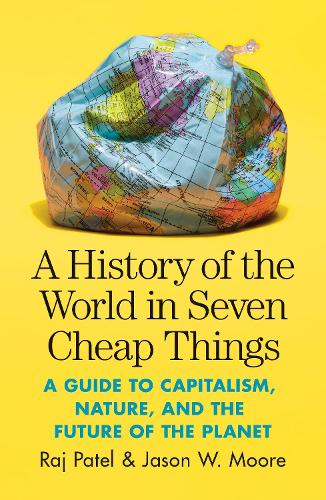

Nature,money,work,care,food,energy,and lives: these are the seven things that have made our world and will shape its future. In making these things cheap,modern commerce has transformed,governed,and devastated Earth. In A History of the World in Seven Cheap Things,Raj Patel and Jason W. Moore present a new approach to analyzing today's planetary emergencies. Bringing the latest ecological research together with histories of colonialism,indigenous struggles,slave revolts,and other rebellions and uprisings,Patel and Moore demonstrate that throughout history,crises have always prompted fresh strategies to make the world cheap and safe for capitalism. At a time of crisis in all seven cheap things,innovative and systemic thinking is urgently required. This book proposes a radical new way of understanding-and reclaiming-the planet in the turbulent twenty-first century.
MEDIA REVIEWS
Publisher: Verso BooksISBN: 9781788737746Number of pages: 336Weight: 276 gDimensions: 198 x 129 mm
MEDIA REVIEWS
If Patel and Moore don't quite make it to Mars,their book still covers an awful lot of ground. They move rapidly between economic analysis,history and political polemic,all in service of the premise that all the cheapness has in fact been catastrophically expensive... the overall impression is one of sweeping erudition,and an impressive ability to synthesise disparate elements.Their central argument - that the inevitable trajectory of capitalism is a race to the bottom in which we all end as losers - is surely one that needs to be heard.By shifting our attention away from the question of global warming to focus on the larger ideological manoeuvrings underpinning the way capitalism seeks to organise nature,Moore and Patel persuasively demonstrate that our responses to the crises of capitalism and climate that we are facing should not be exclusively about preventing catastrophic ecological change by blocking runway expansions. Instead,their work suggests that we are potentially seeing an unravelling of a much more complicated and convoluted set of longer running crises of capital that are becoming increasingly unmanageable,and not just because of heat waves or rising sea levels.(A) highly readable,heavily-sourced bookMaking the persuasive argument that capitalism is more than just an economic system,Patel and Moore illustrate how it has succeeded in creating an overwhelming planetary ecology,separating humans from the rest of nature,organising every relationship between them and exploiting all available resources to work for it as cheaply as possible.
Kommentar