


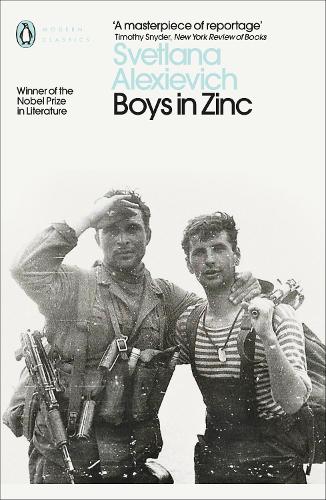

Haunting stories from the Soviet-Afghan War from the winner of the Nobel Prize in Literature - A new translation of Zinky Boys based on the revised text - From 1979 to 1989 Soviet troops engaged in a devastating war in Afghanistan that claimed thousands of casualties on both sides. While the Soviet Union talked about a'peace-keeping'mission,the dead were shipped back in sealed zinc coffins. Boys in Zinc presents the honest testimonies of soldiers,doctors and nurses,mothers,wives and siblings who describe the lasting effects of war. Weaving together their stories,Svetlana Alexievich shows us the truth of the Soviet-Afghan conflict: the killing and the beauty of small everyday moments,the shame of returned veterans,the worries of all those left behind. When it was first published in the USSR in 1991,Boys in Zinc sparked huge controversy for its unflinching,harrowing insight into the realities of war.
Publisher: Penguin Books LtdISBN: 9780241264119Number of pages: 304Weight: 228 gDimensions: 200 x 130 x 17 mm
MEDIA REVIEWS
Superbly translated... Alexievich's choice of truth as hero is the right one for the age of Putin and TrumpAs shattering and addictive as Chernobyl Prayer,this is a polyphonic tour de force that shines a light on war,the plight of heroes,and why post-Soviet Russia is as it isA masterpiece of reportageAlexievich is like a doctor probing the scar tissue of a traumatised nationWhat Alexievich is doing is giving voice to the voiceless,exposing not only stories we wouldn't otherwise hear but individuals as wellThe least well-known wonderful writer I've ever come acrossAlexievich serves no ideology,only an ideal: to listen closely enough to the ordinary voices of her time to orchestrate them into extraordinary booksAlexievich has become one of my heroesThe Belarusian writer has spent decades in listening mode. Alexievich put in thousands of hours with her tape recorder across the lands of the former Soviet Union,collecting and collating stories from ordinary people. She wove those tales into elegant books of such power and insight,that in 2015 she received the Nobel prize for literatureAlexievich's "documentary novels" are crafted and edited with a reporter's cool eye for detail and a poet's ear for the intricate rhythms of human speech. Reading them is like eavesdropping on a confessional. This is history at its rawest and most uncomfortably intimateAlexievich's artistry has raised oral history to a totally different dimension
Kommentar