



Winner of the Bloody Scotland Scottish Crime Debut of the Year 2021
Shortlisted for the McIlvanney Prize 2021
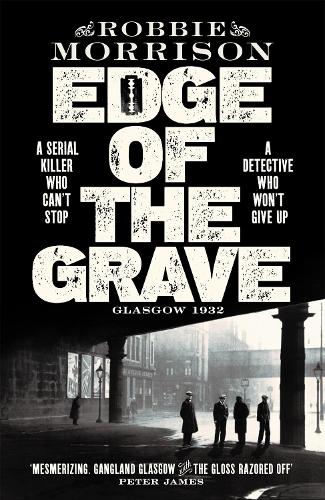
Edge of the Grave by Robbie Morrison is a dark historical crime novel set in Glasgow,1932. A city still recovering from the Great War; split by religious division and swarming with razor gangs. For fans of William McIlvanney's Laidlaw,Denise Mina and Philip Kerr.
When Charles Geddes,son-in-law of one of the city's wealthiest shipbuilders,is found floating in the River Clyde with his throat cut,his beautiful widow Isla Lockhart asks for Inspector James Dreghorn to lead the murder case.
Dreghorn has a troubled history with the powerful Lockhart family that stretches back to before the First World War and is reluctant to become involved. But facing pressure from his superiors,he has no choice in the matter.
The investigation takes him and his partner'Bonnie'Archie McDaid from the flying fists and flashing blades of the Glasgow underworld to the backstabbing upper echelons of government and big business in order to find out who wanted Charles Geddes dead and why. As the case deepens,the pair will put their lives on the line in the pursuit of a sadistic killer who is ready to strike again . . .
Publisher: Pan MacmillanISBN: 9781529054019Number of pages: 416Weight: 636 gDimensions: 244 x 162 x 42 mm
MEDIA REVIEWS
'A mesmerizing debut - raw,brutally violent but immensely human. Early gangland Glasgow with the gloss razored off'- Peter James
'A magnificent and enthralling portrait of a dark and dangerous city and the men and women who live and die in it. I can't wait to spend some more time with Jimmy Dreghorn and Archie McDaid. Robbie Morrison has produced an astounding debut'- Mark Billingham
'Robbie Morrison serves up a delicious slice of 30s gangster noir set in the grim and greasy,sodden and savage streets of Glasgow when it was the Empire's Second City. Peaky Blinders meets William McIlvanney in this rollocking riveting read'- Adrian McKinty
'Wonderfully gritty,violent and nasty in all the right ways'- James Oswald
Kommentar