


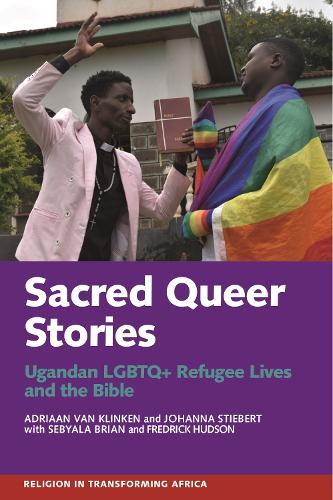

An invaluable insight into the narrative politics and theologies of LGBTQ+ life-storytelling,a key text for those in African Humanities,Queer Studies,Religious Studies,and Refugee Studies.Presenting the deeply moving personal life stories of Ugandan LGBTQ+ refugees in Nairobi,Kenya alongside an analysis of the process in which they creatively engaged with two Bible stories - Daniel in the Lions'Den (Old Testament) and Jesus and the Woman Caught in Adultery (New Testament) - Sacred Queer Stories explores how readings of biblical stories can reveal their experiences of struggle,their hopes for the future,and their faith in God and humanity. Arguing that the telling of life-stories of marginalised people,such as of Ugandan LGBTQ+ refugees,affirms embodied existence and agency,is socially and politically empowering,and enables human solidarity,the authors also show how the Bible as an authoritative religious text and popular cultural archive in Africa is often used against LGBTQ+ people but can also be reclaimed as a site of meaning,healing,and empowerment. The result of a collaborative project between UK-based academics and a Nairobi-based organisation of Ugandan LGBTQ+ refugees,the book provides a valuable insight into the narrative politics and theologies of LGBTQ+ life-storytelling. A key text for those in African Humanities,Queer Studies,Religious Studies,and Refugee Studies,among others,the book expresses an innovative methodology of inter-reading queer life-stories and biblical stories.
MEDIA REVIEWS
Publisher: James CurreyISBN: 9781847013675Number of pages: 280Dimensions: 234 x 156 mm
MEDIA REVIEWS
Sacred Queer Stories is a daring exposition of the relationship between LGBTQ+ experiences and religious stories that need to be further explored. Aside from recounting personal stories,the text has become an indispensable landmark for alternative interpretations of religious texts in Africa that position such texts as friendly and corrective rather than horrific and repelling(A) remarkable example of academic research that centers the decolonization and democratization of a field of knowledge and its creators.In Sacred Queer Stories the authors reflect deeply on their positionality as white,UK-based scholars holding a power imbalance with their African participants. They distance themselves from the "white saviour" attitude of many scholars and activists from the Global North,and honour the work of LGBTQ+ African grassroots activists."
Kommentar