


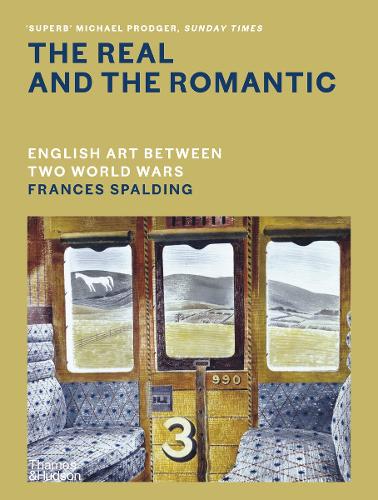

A fresh look at a period of English art that has surged in interest and popularity in recent years,authored by one of Britain's leading art historians and critics.
The 21st century has seen an enormous surge of interest in English art of the interwar years. Work by artists like Stanley Spencer and Eric Ravilious has soared in value while new critical attention has been paid to others,often women,who were previously overlooked,such as Winifred Knights and Evelyn Dunbar. High-profile exhibitions have attracted record-breaking visitor numbers and challenged received opinion,encouraging a more nuanced understanding of the cultural landscape of the 1920s and 1930s.
With these new perspectives in mind,The Real and the Romantic takes a fresh look at this richly diverse period in English art. The early part of the period was marked by the intensity of commemoration that followed the first world war; the later by a darkening of mood brought about by the foreshadowing of the second. The 1920s saw the growing influence of modernism across British art and design. But as modernism reached a peak in the mid-1930s,there arose a desire to revive native traditions in modern terms,and in a way that let in the past. The former push towards abstraction was replaced by a renewed concern with place,memory,history and particularity. The arrival of Surrealism further disturbed the ascetic purity of high modernism and also fed into the British love of the strange. Artists increasingly sought refuge from the modern world in the remoteness of the past.
Frances Spalding's thematic approach emphasizes the networks of connection between artists,illuminating the intriguing alliances and shifts in artistic sensibility that fed into the creativity of the interwar years. Significant among these were a determination to break down the barriers surrounding the western European tradition through reference to the art of other cultures; and the pursuit of a'primitive'or direct approach to art,particularly through study of the early Italian Renaissance.
Throughout all of this,an emphasis on the'real'or the authentic remained dominant,even as romantic feeling played an important role in shaping artists'responses to their subjects. Frances Spalding acknowledges the fluidity of the relationship between these two concepts and the way in which each'can tinge,colour or even merge with the other'.
Publisher: Thames & Hudson LtdISBN: 9780500518649Number of pages: 384Weight: 1400 gDimensions: 246 x 186 mm
MEDIA REVIEWS
'Superb .... Spalding also uses her persuasive narrative to highlight the role of women artists in the period. As the biographer of a cluster of Bloomsbury figures,she unsurprisingly gives Dora Carrington and Vanessa Bell full measure,but also lesser-known figures such as the single-minded New Zealander Frances Hodgkins,Evelyn Dunbar and Winifred Knights'- Michael Prodger,Sunday Times'Spalding's prose is as clear as a Ravilious greenhouse,her thoughts as orderly as a Ben Nicholson white relief. No art-world waffle whatsoever. Hurrah. This book deserves to go into many editions'- Laura Freeman,Best Art Books of the Year,The Times'(Spalding) unravels the complexities of English art between the wars with clarity and confidence,moving back and forth in time,and between artists,writers,critics,curators and collectors...Throughout,she illuminates what she neatly describes as "the recurrent tension in this period between a precarious stasis on the one hand and,on the other,a yearning for rapid change"...The period between the wars was a varied and important stage in the development of British art. Spalding shows us how and why'- Literary Review'Frances Spalding's beautifully illustrated history reveals the hidden undercurrents that electrified the work of 1920s and 1930s artists...The author combines the august and measured commentary of the distinguished art historian with a gumshoe's curiosity...This is a weighty and beautifully illustrated addition to the scholarship of its period'- Stephen Smith,Financial Times'The writing is thorough and the arguments convincing,with plenty of examples,analyses and histories. The book is also generously illustrated,and Thames & Hudson again pull off their trick of getting good colour reproduction on book paper'- Artbookreview'Enjoyable...There's much to be learnt from Spalding's engaging study of a complex period'- Andrew Lambirth,The Spectator'The author has compressed a deluge of material into 384 critically lucid and crucially well illustrated pages. She is expert in discerning trends and connections between hundreds of human strands...all this perceptive linkage seems only to emphasise the fundamental individuality of some of the most interesting English artists between the wars'- Country Life'A great page-turner,then,but also a fine reference book,which will,undoubtedly,be frequently pulled off the shelf for information and inspiration about that variegated array of artists - real and romantic - whose imagination lit up what is nowadays routinely considered to be the richest period in British art history'- British Art Fair News'Veteran biographer Frances Spalding,known for her insightful books on the early British Modernists Vanessa Bell,Duncan Grant and Roger Fry,turns her penetrating gaze on the interwar years'- Christie's'Delectable...the joy and intense interest of this book will come courtesy of the attention given by its scholarly but always readable author to less well-known names'- Rachel Cooke,Guardian'Paul Nash,Gwen John,Henry Moore,Eric Ravilious,Ben Nicholson and Stanley Spencer all feature in this fresh and enlightening new look at English art between 1918 and 1939,which travels from modernism to English pastoral and embraces a host of lesser male and female figures in its broad and highly assured sweep'- Sunday Times'This amply illustrated volume is a gripping read whether for new collectors looking for tips,art lover or expert'- Rachel Billington,The Tablet'Figures such as Ravilious,Knights,Dunbar,Nash and Spencer re-interpreted Britain and its landscape for a new world,and this thoughtful and generously illustrated book charts their progress as well as the environment and society they sought to represent'- The Artist'Spalding brings new insights to familiar names...a layering and interweaving of ideas bring increasing depth and nuance to our understanding...alongside the revision and expansion of art historical narratives of the period,precisely what you expect from a writer of Spalding's calibre,come nuggets of fascinating detail'- Studio International'A revealing survey of how British artists reacted to the shock of the First World War...Frances Spalding meticulously and stylishly uncovers a range of vibrant (artistic) responses,from the modern pastorals of Eric Ravilious to Henry Moore's radical experiments'- New Statesman'A clear,compelling read that wears its scholarship with an attractive lightness and,within its genre,could be fairly called a page-turner...a landmark book. A good read. And a must-read if your summer plans include a visit to Tate Britain or some other gallery that takes the work of English painters seriously'- Camden New Journal'Engaging and illuminating...a perfect aid to those interested in the influences,painting methods and lives of well-known artists,but also anyone who wishes to discover less famous artists working in a variety of styles'- The Critic'Frances Spalding describes,with the maximum of insight and minimum of fuss,the myriad ways English painters and sculptors responded to the challenge of making art in the aftermath of the First World War. She employs both major and minor names - from Paul Nash to Winifred Knights - to reveal the interwar years as a time of unexpected invention and stylistic fecundity'- New Statesman,Books of the Year
Kommentar