


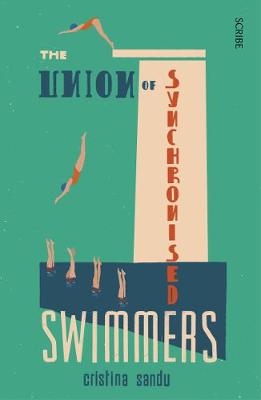

It's summer behind the Iron Curtain,and six girls are about to swim their way to the Olympics - and a new life.
In an unnamed Soviet state,six girls meet each day to swim. At first,they play,splashing each other and floating languidly on the water's surface. But soon the game becomes something more.
They hone their bodies relentlessly. Their skin shades into bruises. They barter cigarettes stolen from the factory where they work for swimsuits to stretch over their sunburnt skin. They tear their legs into splits,flick them back and forth,like herons. They force themselves to stop breathing.
When they find themselves representing their country as synchronised swimmers in the Olympics,they seize the chance they have been waiting for to escape and begin new lives.
Scattered around the globe,six women live in freedom. But will they ever be able to forget what they left behind
Publisher: Scribe PublicationsISBN: 9781913348236Dimensions: 198 x 129 x 8 mm
MEDIA REVIEWS
'With structural,determined prose,Cristina Sandu embodies the Eastern bloc cryptology of storytelling where strings of non-verbal cues and mistranslations become ways of speaking. Sandu evokes that eerie Soviet sense of hope,brimming with futility and grace.'- Yelena Moskovich,author of The Natashas
'Sandu's precise narration demonstrates the refined and sparing characteristics of Finnish modernism...These ingeniously disconnected stories entice the reader...Delicate and subtle.'- Helsingin Sanomat
'Cristina Sandu's narration is magical...Her poetic and airy prose weaves together the strongly metaphorical and the realistic...In these moving stories about the fates of Eastern European women,her narrative is universal and titanic.'- Suomen Kuvalehti
'Cristina Sandu's spare and sparkling prose is intimate and visceral. A deeply moving story about six women who dare to dream bigger than their muddy river,whose lives splinter from their tight synchronized formations into an unflinching,often unforgiving world. An exquisite and powerful read.'- Lindsay Zier-Vogel,author of Letters to Amelia
'There are a lot of subsurface vibrations in the book. Desire,as well as clear threats,but we don't know whether those actualise. Ingeniously disconnected stories entice the reader to continue. On the other hand,they suggest that Sandu also has larger stories to tell...The accurate,delicate and subtle writing relies on the refined and sparing characteristics of the Finnish modernism.'- Helsingin Sanomat
'Skilfully crafted and defined,airy,and multi-layered. Highly praised for the themes of detachment as well as the description of externality and differentness. A work greater than its size gives a chance to pause,feel,and reflect on what one has read.'- Toisinkoinen Literary Prize Jury citation
Praise for The Whale Called Goliath:
'If a debut reaches even a fraction of the lyrical,graceful and melancholic beauty present in Cristina Sandu's The Whale Called Goliath,or of the exotic reality she weaves from golden fairy-tales,then one can expect a great deal...The story is intertwined with unimaginably exquisite senses and feelings,the delicate and brittle question of what is the world in which we live...This debut is beautiful as a prayer.'- Keskisuomalainen
'The debut novelist Cristina Sandu creates both a photographically precise and magical story of what it is like to live between two different cultures. The best thing in the novel is its language: dense,poetic,and sensually beautiful. How far will this young author end up reaching'- Suomen Kuvalehti
'The novel exquisitely describes the pains of multiculturalism...The Whale Called Goliath is at its most luscious in its linguistic expression...It is a pleasure to travel through its delicate,melancholy atmosphere.'- Turun Sanomat
'The debut novelist Cristina Sandu creates both a photographically precise and magical story of what it is like to live between two different cultures. The best thing in the novel is its language: dense,poetic,and sensually beautiful. How far will this young author end up reaching'- Suomen Kuvalehti
'The novel exquisitely describes the pains of multiculturalism...The Whale Called Goliath is at its most luscious in its linguistic expression...It is a pleasure to travel through its delicate,melancholy atmosphere.'- Turun Sanomat
Kommentar